By Agostina Lucía Sánchez Stábile, participant of the Local Innovators Program 2022 and current facilitator.
2024 brought with it a global political realignment that had concrete effects on the financing and implementation of public policies. In Argentina, national transfers to the provinces sand were significantly reduced, affecting key programs in areas such as health, education and infrastructure.
Internationally, the change of administration in the United States led to a review of foreign aid, putting various funds earmarked for Latin America and the Caribbean that supported social initiatives co-financed by international agencies.
In the current context, a key question arises: How to sustain essential social programs in an environment marked by underfunding and precariousness?
To address this challenge, it is essential to rethink the traditional approach to projects, which, far from following a linear process (going from understanding the problem to financing and execution), require a systemic understanding of complex and structural issues. Consequently, we are faced with the need to build multisectoral, interdisciplinary, and cost-effective solutions.


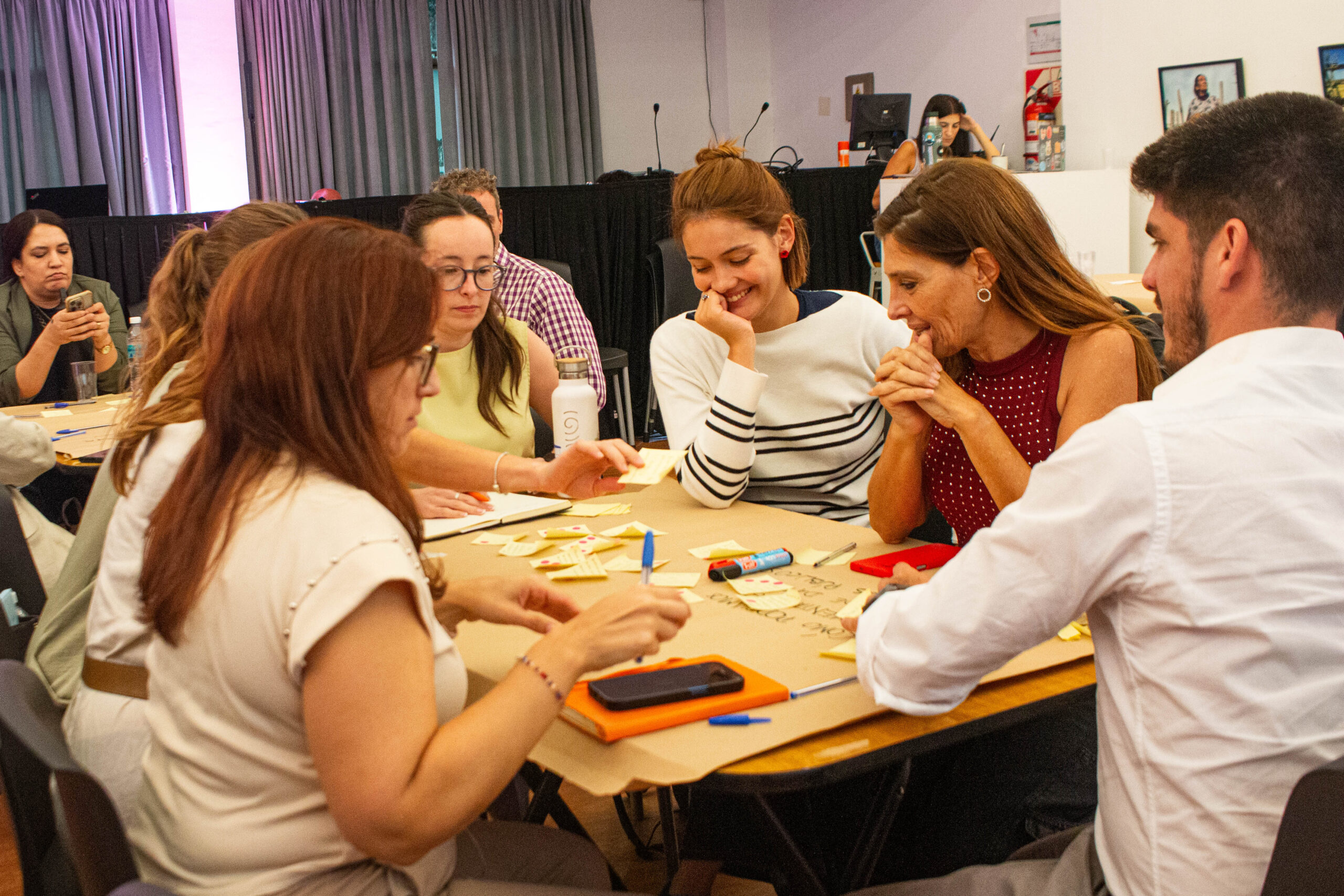
Like our grandmothers' stews in the post-war period or the neighborhood's collective purchases in 2001, the scarcity of resources and the difficulty of the context push us, once again, to seek answers collectively and optimize every available resource, directing it where it can have the greatest impact.
A historical strategy that has allowed us to survive and move forward: collective intelligence. That "common pot" where Norma's beans, Raúl's garden squash, and Porota's scraps of meat come together. A space where the best of each person converges to create something imperfect, not very gourmet, but valuable for its resilience, adaptability, and ability to respond to the most urgent needs.
Let's get back to what matters: educational programs, primary health care, support for people in vulnerable situations, community networks that provide support where the market doesn't reach.
A common mistake made by government agencies (the first actors we usually look to when faced with these challenges) is trying to solve them in isolation. Turning inward, seeking solutions within their own structures, or building new ones from scratch. But given the complexity, trying to solve everything in isolation is not only ineffective, but often ends up being detrimental.
As Luciano Crisafulli suggests in his critique of certain approaches to public innovation, Often, the "user-centered" slogan becomes an empty one when the solutions designed ignore what already exists, what already works, what has already been created by other actors with situated knowledge and territorial legitimacy. Innovation doesn't always mean creating from scratch; often, it means having the humility and intelligence to adopt what already works, adapt it, and scale it judiciously.
For their part, social organizations (historical actors that appear time and again wherever there are unmet needs) have a knack for creativity. They are often the first to react, to imagine community-based solutions, to sustain, almost without resources, what the State or the market overlooks. However, they also face their own challenges.
On the one hand, they harbor a deep distrust of the state, especially since the government becomes synonymous with partisan politics. This confusion strains relationships, erodes the possibility of working together, and diminishes their strategic power.
On the other hand, often out of necessity or for protection, they tend to centralize resources and decisions, even when they share territory, objectives, and target populations with other organizations. The fear of losing sustainability can become a trap: it confines, isolates, and weakens.
And all of this is happening, it bears repeating, in a context where there is no room for duplicating efforts, no resources to maintain parallel structures, and no time to wait for perfect solutions. The crisis forces us to be creative, yes, but also to join forces to support ourselves and what matters.
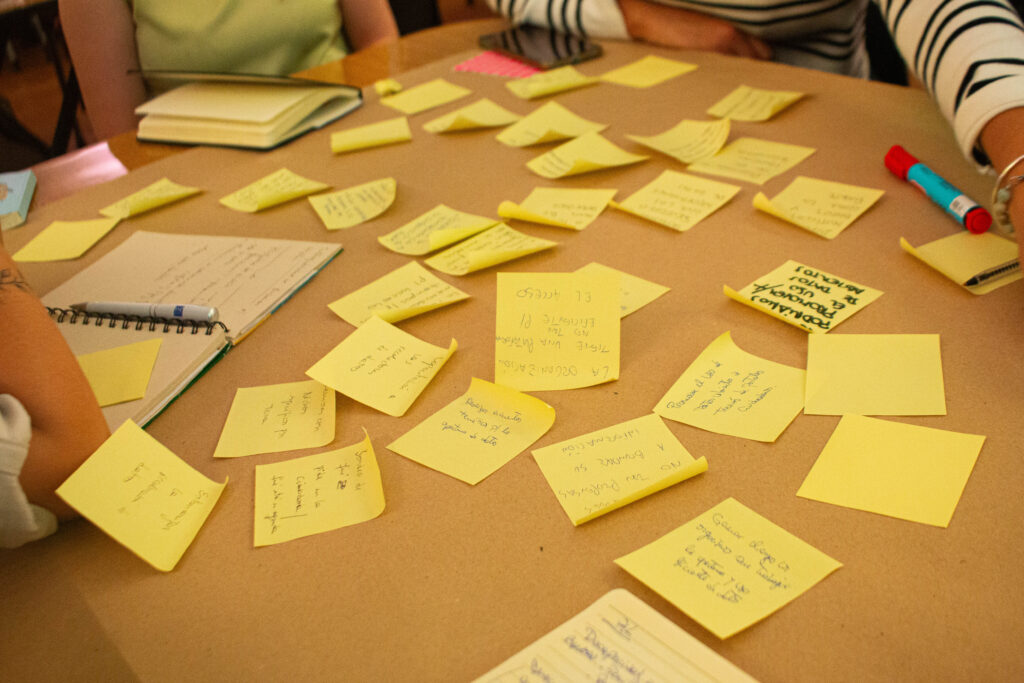
Therefore, collaboration between the public and social sectors is not an option: it is a necessity. Because when both sectors are open, acknowledge each other, and trust one another, it is possible to build smarter, more efficient, and more humane solutions. Solutions that combine scale with proximity, technical expertise with local knowledge, and institutional capacity with empathy.
And I'm not approaching this from a fictional perspective; despite the challenges that often accompany public-social articulation (mistrust, egos, complex bureaucracies, conflicting objectives, different languages, lack of transparency or commitment), some cities have already taken concrete and hopeful steps in that direction.
Case: Less Divide, More Community
This case is particularly relevant to me. In 2022, the Municipality of the City of Córdoba, Argentina, faced the challenge of coordinating the "Less Divide, More Community" program, an initiative aimed at reducing the digital divide in our city. But the real challenge wasn't just the "what," but the "how": how to do it more effectively, how to scale without losing depth, how to respond to needs without duplicating efforts.
It was then that we participated in the PIL (Local Innovators Program), a space where we not only validated many of the hypotheses we had been formulating as a team (and discarded biases we had developed), but also met other stakeholders who were already working on the topic, with experience and proven methodologies in areas where we were still taking our first steps. That famous “change network” transformed us: it allowed us to imagine a new way of implementing public policies, based on networking, trust, openness, and cooperation.
That's how, instead of designing everything from scratch, we decided to do it in partnership. We converged on objectives, shared resources, and, above all, learned to recognize each other's strengths. Since then, "Less Gap, More Community" has been built collaboratively: the municipality contributes its extensive territorial reach, physical spaces, and ability to mobilize people, while the organizations offer their expertise in content development, outreach to specialized teachers, and pedagogical follow-up.
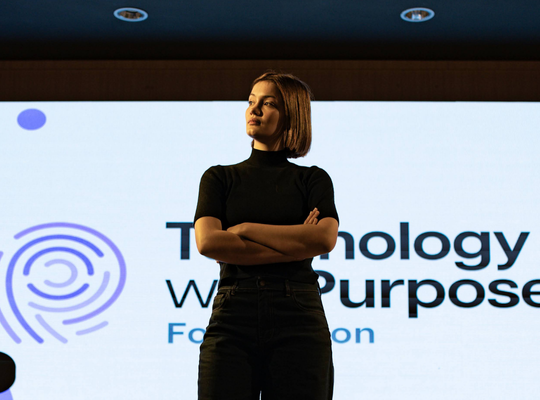
In 2024, the incorporation of the Technology with Purpose Foundation marked a new milestone in this collective effort. For the first time, the planning sessions were truly collaborative: the municipality identified the needs within the community; the Foundation, with its proven educational solution, contributed content, teachers, and a strong focus on results; and the “Less Gap” team was responsible for securing the physical spaces and engaging the target audience.

In just one year, more than 1,300 people accessed free digital skills training. Both partners exceeded their initial goals, leveraging their strengths and relying on each other during the most challenging times. Thus, the collaboration ceased to be a gamble and became a proven fact: cooperation is not an idealistic option, but a smart strategy in times of scarcity.
Those who currently hold positions of power in the government and hesitate to open their doors to social organizations should remember that no administration knows everything or can do everything. The experience and expertise that many organizations bring are not a threat, but a valuable resource for responding more quickly, empathetically, and effectively to the complex problems of our society.
To organizations that still distrust or feel that working with the government is too difficult, bureaucratic, or draining, I would say that scaling up is only possible when our solutions transcend our own limitations. Working together may be imperfect, yes, but when it succeeds, it transforms realities.
Like those stews made by grandmothers where everyone, with love, humility and respect, brought what they had, well-woven alliances are today the popular pot of the future: imperfect, resilient, born from encounter, capable of sustaining the essential even in the midst of scarcity.