The common problem this diverse team faces is, above all, the lack of added value in their products. In other words, they don't achieve a profitable difference between their manufacturing costs and the selling price. Many of the women start their businesses to secure a long-term livelihood, but most encounter financial difficulties when they try to incorporate added value, hindering their ability to improve the quality of their products. Furthermore, their lack of financial literacy prevents them from effectively planning for growth, which becomes a crucial challenge.
This challenge brought us together again in that town. The aroma of coffee awaited us at the Italian Mutual Aid Society building, an association that warmly opens its doors to host our meetings.
The faces were familiar and the smiles encouraging. This occasion brought us together to move closer to realizing joint experience initiatives outlined on our path towards collaborative systemic innovation.
Attendees and collaborators prepared the room, sound system, and screens as the first rays of the morning sun timidly heralded the arrival of spring. The eagerness to work was evident in the neighbors who arrived promptly: local entrepreneurs were the first to show up. Everything was ready for the presentation!

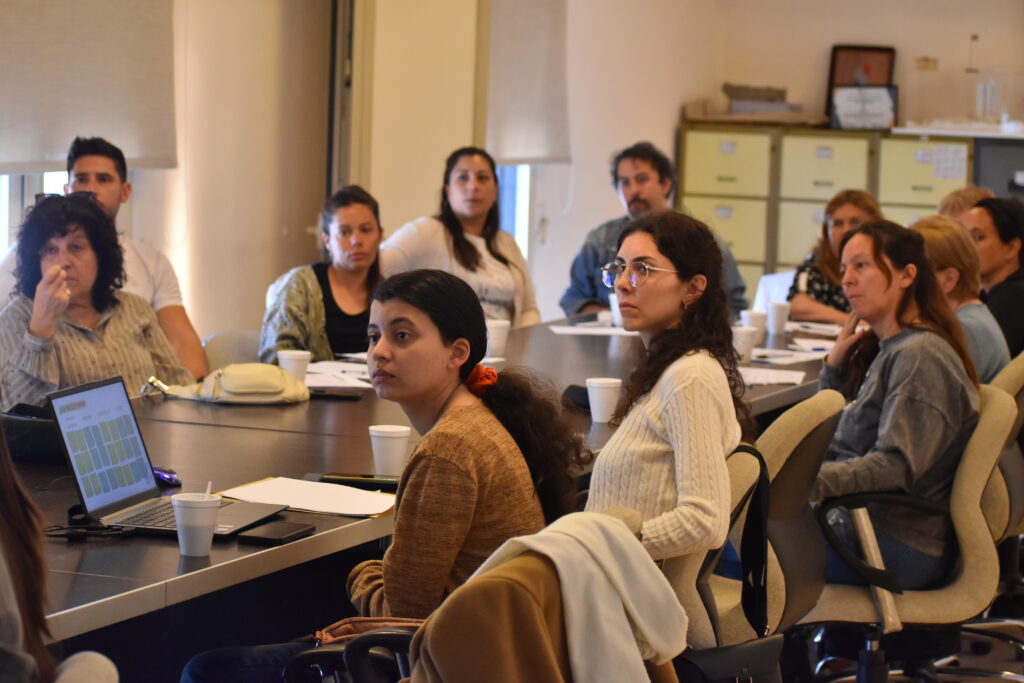
Magalí Chiacchiera, one of our government leaders, began by welcoming and introducing us to the new participants. She summarized the causes and consequences of the previous meeting within the framework of the Networks for Change, and introduced the goal of the day: to practice a collective ideation based on the detection of areas for improvement in the production process.
This ranking This led to the objective of generating 'design questions' starting with the question "How could we?" so that the artisans themselves, organized into sub-teams, could begin group planning tasks. Immediately engaged, they pragmatically produced a wealth of deductions.
These were the results:
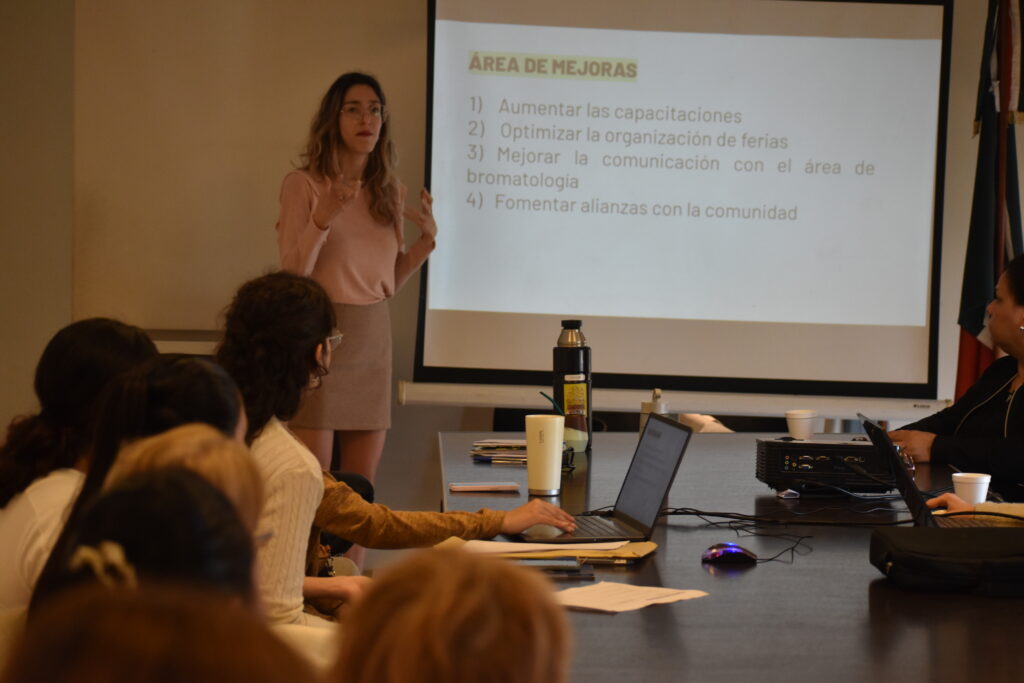
–Fostering partnerships with the community: mostly through social media, supported by advertising and invitations to vendors to public events. For its part, the Municipality could help the vendors by providing them with transportation to reach other locations and/or a common fund to cover expenses; setting up a physical location where an employee serves them during business hours (also creating a job).
–Optimize the organization of trade fairs: coordinate prior assemblies among fairgoers to plan a schedule of greater annual frequency in sites to be requested, or a fixed tour in the Sarmiento Park of Carcarañá, expressed as a place of broad interest.
-Improve communication with the area of food science of the city.
–Increase training: in matters of marketing, Photography, administration, network management, and sensitive entrepreneurship (in internal conversations among market vendors) to increase the levels of self-esteem and security in the merchants.
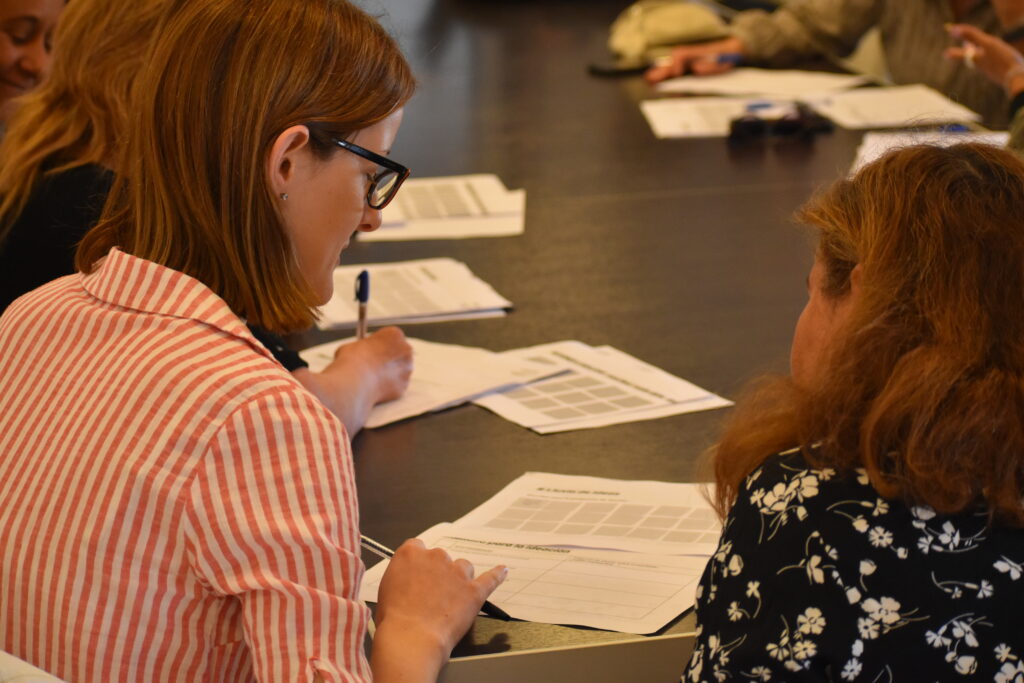
This method triggered the brainstorming that the actors wrote in their own handwriting and then cleverly filtered through a 'matrix', taking into account impact and feasibility variables. These concepts were explained by Magalí during the activity, and proposals such as creating a "digital showcase for entrepreneurs" were highlighted.
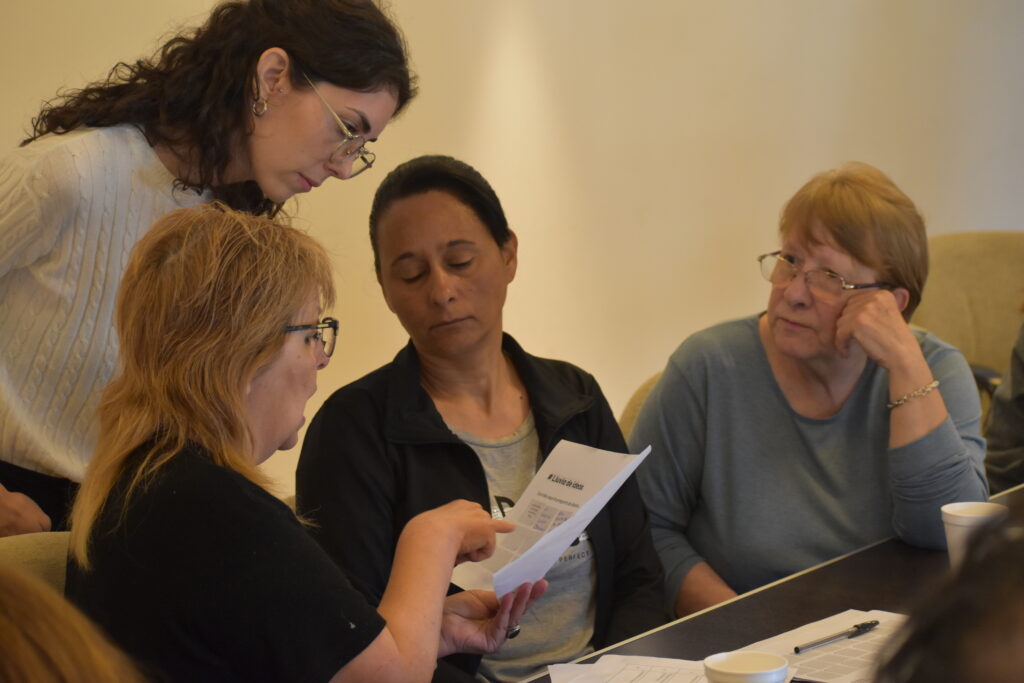
Once this stage was completed, we moved on to the sharing session: it was surprising. The exchange activated people's imaginations and creativity blossomed:“We can combine a gastronomic product with an art piece in wood or ceramics, inventing a third option capable of combining two sales into one.”,” said Susana Clavijo, one of the invited workers.
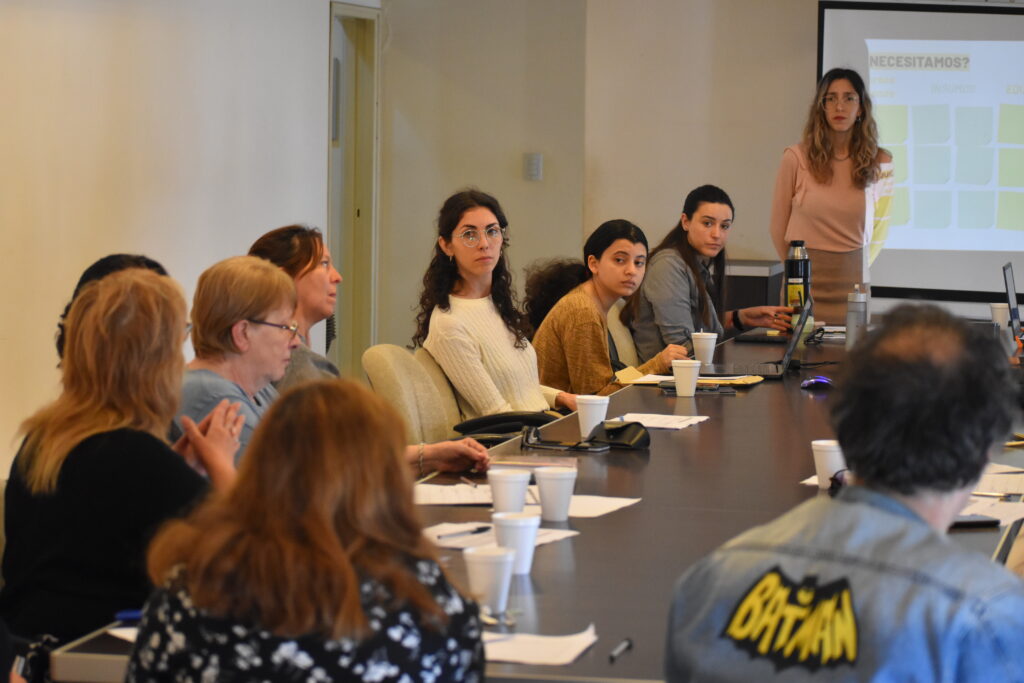
It was time to reach an agreement. The collaborative operation allowed us to choose a superior proposal: to project a BUSINESS ROUNDTABLE BETWEEN ARTISANS.
The groups immediately detailed a series of actions to be taken, accompanied by a list of human resources, supplies, and equipment necessary for their implementation. In addition, they identified strategic allies as beneficiaries, financial entities, key partners and in-kind contributors, including government, educational and cooperative institutions, that would contribute to the success and growth of the project.
During this great moment of feedback, the interruptions to share thoughts were pleasant: there was much to say, and much remains to be done.
Some of the phrases that this meeting left us with.
“We believe the possibility of pooling resources for assistance is motivating. The challenge of implementing a public policy is encouraging for those seeking to solve a fundamental economic problem without trying to gain an unfair competitive advantage over their peers.”Roxana Moreno, municipal leader’s team.
“Our conclusion is positive; in the proposal we see an effective starting point for the next journey, which becomes a guiding light as we move forward with the Missions.”Juliana Altamira, social leader’s team.
“We believe this systemic innovation prototype will improve the quality of life for these workers who, through great effort, produce top-quality goods without the benefits they should have as guaranteed employees of the formal economy. Symbolically, it represents a quest to strengthen their rights as citizens.”Marisol Monti and Mónica Bordón, the municipal leader's team.
“Networking, even at a micro-scale, as reflected in interventions of this kind, is a crucial development for the region's progress. Regional growth is essential from a contemporary perspective, as it leverages the strength of intermediate cities as sustainable sources of national production. In this sense, we find support in the PIL (Local Investment Plan).”Magalí Chiacchiera, municipal leader.
“We will support a fair trade model, grounded in a gender perspective and the protection of all minorities, and we will encourage reciprocal learning across diverse fields of knowledge. This is the kind of connection we strive to foster and the direction we aim for every day.”Soledad Chamorro, social leader.
“Webinars are extremely fruitful, providing us with numerous tools to dynamically conduct meetings of the Change Networks despite the physical distance that separates our cities.”.” Nannette Favot, social leader's team.
The fusion of these three sectors exudes genuine commitment. It is an intercultural mechanism between producers from regional economies, a local government entity, and a national academic institution that is condensing interdisciplinary knowledge, with a very interesting dialogue that, like a kaleidoscope, analyzes and solves a problem from multiple perspectives.
We are genuinely interested in finding a winning strategy to solve the problem, and this was demonstrated when, on both occasions, the representatives of the entrepreneurial community left satisfied. For their part, the Rosario contingent gained even more momentum than on their outward journey thanks to the stimulating discussions about the next steps.
The 45 km between Carcarañá and Rosario were reduced to 0.
ENG
Two Jerseys, One Color
The members of the Secretariat of Production, Employment, and Foreign Trade, along with those from the Department of Outreach and Technological Development (FAPyD UNR Extension Office), are cheering for the same team: the entrepreneurs of Carcarañá, a town in the province of Santa Fe, Argentina. The game is going well, and the goals are scored within the framework of the “Networks of Change” promoted by the 2024 Local Innovators Program.
The main challenge faced by this diverse team is, above all, the lack of added value in their products. In other words, they struggle to generate a profitable margin between production costs and the sale price. Many women start their ventures to create a long-term livelihood, but encounter most financial barriers when trying to enhance the quality of their products. Furthermore, a lack of financial literacy prevents them from efficiently planning their growth, which becomes a critical challenge.
This challenge brought us together again in Carcarañá. The scent of coffee welcomed us at the Italian Mutual Aid Society building, an association that warmly opens its doors to host our gatherings. Familiar faces and motivating smiles greeted us. This time, we came together to move forward with joint initiatives on our path toward collaborative systemic innovation.
Attendees and collaborators prepared the room, setting up the sound system and screens while the morning sun, timidly heralding the arrival of spring, accompanied them. Local entrepreneurs, eager to work, arrived on time and were the first to mark their attendance. Everything was ready for the presentation!
Magalí Chiacchiera, one of our government leaders, started by welcoming us and introducing new participants. She summarized the causes and outcomes of the previous meeting within the framework of the Networks of Change, and introduced the day’s goal: to engage in collective ideation by identifying areas for improvement in the production circuit.
This led to the creation of ‘design questions’ starting with “How might we…?” that allowed artisans, organized into sub-teams, to begin group tasks. Committed to the process, they quickly generated a wealth of pragmatic insights.
Here are the outcomes:
Promote community alliances: primarily through social media, supported by advertisements and invitations for artisans to participate in public events. The municipality could assist by providing transportation for artisans to attend fairs in other towns or by creating a communal fund to cover expenses. Additionally, they could set up a physical store with an employee to manage sales during business hours, creating a new job position.
Optimize the organization of fairs: coordinate pre-event meetings among artisans to plan a more frequent annual schedule in requested locations, or establish a permanent market in Carcarañá’s Sarmiento Park, a widely favored spot.
Improve communication with the city's health and safety department.
Increase training opportunities: in marketing, photography, administration, social media management, and sensitive entrepreneurship (in internal conversations among artisans), thus boosting their self-esteem and confidence.
This method triggered a brainstorming session, with participants writing down their ideas and then filtering them through a ‘matrix’ that considered impact and feasibility. These concepts were explained by Magalí during the activity, highlighting proposals like creating a “digital showcase for entrepreneurs.”
After this stage, it was time to share insights. The exchange was amazing. The participants' creativity flourished: ’We can combine a food product with a wood or ceramic art piece, creating a third option that merges two sales into one,“ suggested Susana Clavijo, one of the invited artisans.
It was time to reach an agreement. The collaborative process allowed us to choose a standout proposal: organizing a BUSINESS ROUND FOR ARTISANS.
Immediately, the groups outlined a series of actions to be taken, including a list of human resources, supplies, and equipment needed for implementation. They also identified strategic allies such as beneficiaries, financial institutions, key partners, and in-kind collaborators, including government, educational, and cooperative institutions, which would contribute to the project's success and growth.
During this fruitful moment of feedback, the frequent interruptions to share ideas were delightful. There was much to say, and even more to do.
Some of the remarks from this meeting:
“We believe that the possibility of creating a united path for assistance is highly motivating. The challenge of implementing public policy is encouraging for those seeking to solve an economic problem without competing with their peers.” — Roxana Moreno, municipal leadership team.
“Our conclusion is positive. In this proposal, we see an effective first step for the next stage, which becomes a guiding light as we advance with the Missions.” — Juliana Altamira, social leadership team.
“We trust this prototype of systemic innovation to improve the quality of life for these hardworking artisans who create high-quality products under challenging conditions, without the guarantees they deserve as members of the formal economy. Symbolically, it's a pursuit of strengthening citizenship rights.” — Marisol Monti and Mónica Bordón, municipal leadership team.
“Working in networks on a micro-scale, as reflected in interventions of this nature, is crucial for territorial development. Regional growth is essential from a contemporary perspective, as it captures the strength of intermediate cities as sustainable sources of national production. In that sense, we find support in the LIP.” — Magalí Chiacchiera, municipal leader.
“We will support a model of fair trade, grounded in gender perspectives and protection of all minorities, while encouraging mutual learning across different fields of knowledge. This is what we aim to achieve through the connections we foster day by day.” — Soledad Chamorro, social leader.
“Webinars are incredibly fruitful. They provide us with numerous tools to conduct dynamic meetings for the Networks of Change, despite the physical distance between our cities.” — Nannette Favot, social leadership team.
The fusion of these three sectors reflects genuine will. It is an intercultural mechanism among regional economy producers, a local government entity, and a national academic institution, distilling interdisciplinary knowledge. Like a kaleidoscope, this collaboration analyzes and resolves problems from multiple perspectives.
We are truly committed to finding a winning strategy for these challenges, and that was evident when, on both occasions, the entrepreneurs left feeling satisfied. Meanwhile, the Rosario team returned with even greater momentum, energized by stimulating discussions about the next steps.
The 45 kilometers between Carcarañá and Rosario have been reduced to zero.