The questions arise, and partly out of embarrassment, and partly out of ignorance, they tend to disappear and vanish in the blink of an eye. Why do we find it so difficult to talk about disability? What does the term "accessibility" refer to? Why do we in society at large speak of "exclusion"? Exclusion of those we "should" include? What were we at Ayni and the Accessibility Committee looking for when we decided to come together for the first time?
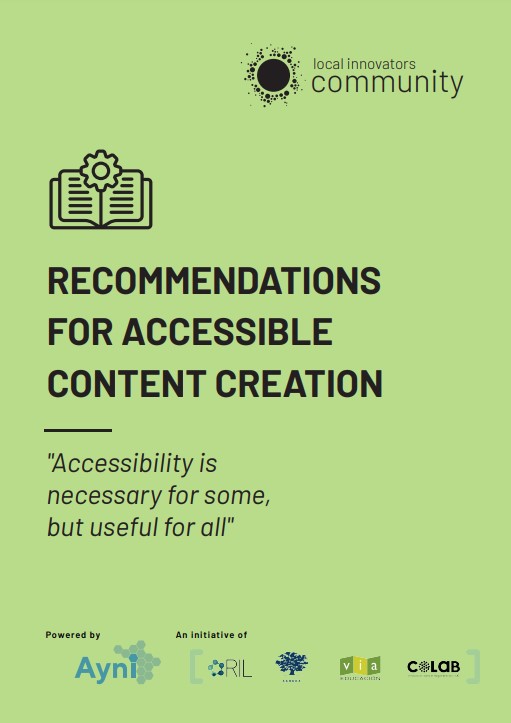
All these questions were taken apart and put back together again along the path we began with the Local Innovators Community. We rethought and debated the answers and the needs, and arrived at some conclusions that we decided to include in this first document. Recommendations for creating accessible content.
AYNI is an initiative driven by the Local Innovation Network (Argentina), Ashoka Global, Vía Educación (Mexico), and the Social Innovation Colab of the Catholic University of Chile. With great effort, we have developed this community document to contribute to equity in the digital environment. Our goal? To help improve facilitation practices.
“Este documento es muy importante: primero porque RIL tomó en cuenta a la diversidad y decidió ponernos en su agenda para que las minorías también tengamos acceso. En segunda instancia, porque se hizo con los propios usuarios de estas recomendaciones, nos incluyeron y atendieron lo que les pedimos. Es un primer paso, es un orgullo haber participado. Entiendo que esto va a seguir creciendo y RIL se va a convertir en un organismo inclusivo” Karina Sanchez, Director of Disability at the Municipality of Junín, Argentina, tells us.

At AYNI, we are dedicated to supporting the collaborative creation and implementation of systemic solutions to local challenges in cities. We carry out this mission through the Local Innovators Program, which promotes the incubation of systemic impact initiatives; the Local Solutions Marketplace, which fosters the development of and investment in innovative solutions; and the Local Innovators Community, where we work to strengthen the capacities of systemic leaders by creating a global collaborative network.
“La cooperación entre las diferentes culturas de los diferentes países(sic) se volvió una herramienta valiosa para lograr la inclusión, ya que tuvimos que encontrar las coincidencias para construir entre todos. Logramos un producto excelente y único, atravesado por la necesidad de participación de la población en una metodología que aporta Ayni para desarrollar proyectos sistémicos que ayuden a las comunidades”, Jenny Esquivel comments, from Costa Rica.
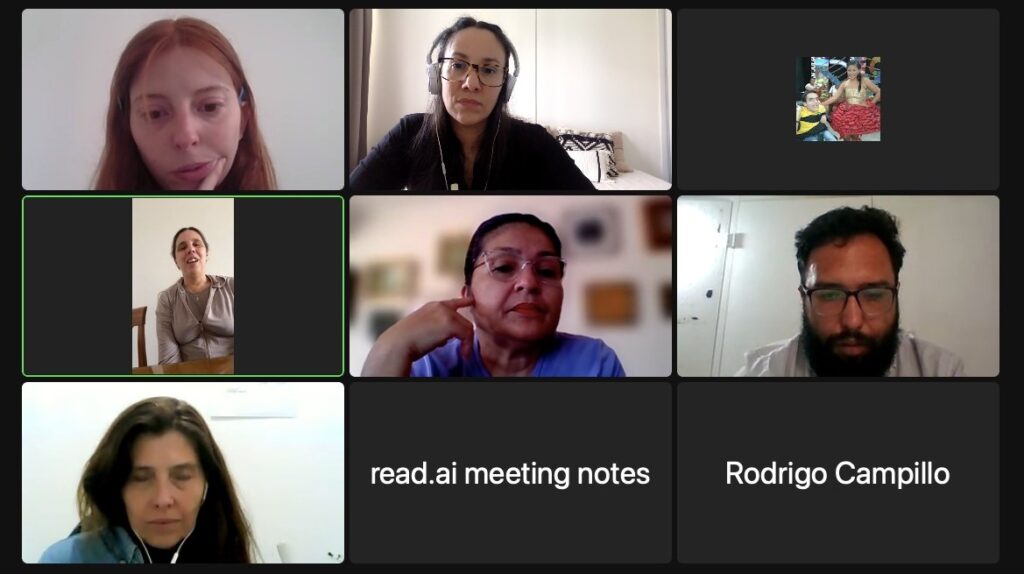
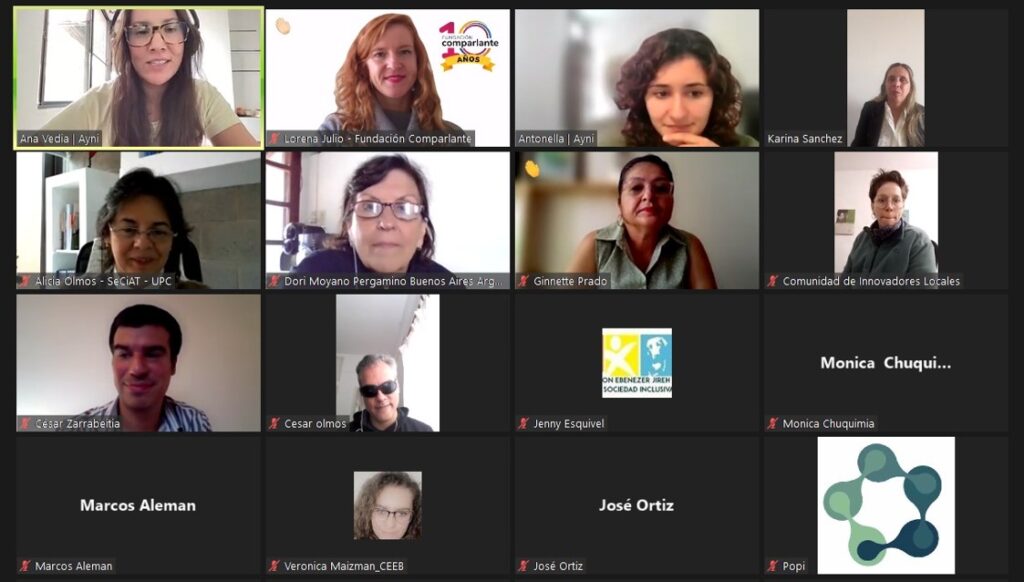
The Accessibility Working Group, comprised of participants from various teams within the 2022 and 2023 Local Innovators Program (PIL), serves as a working group to foster learning and collaboration on inclusion issues and was instrumental in the creation of this document. This collaborative effort between experts and organizations from across Latin America underscores the importance of diversity and cooperation in developing inclusive solutions.
Estas recomendaciones buscan garantizar el acceso, la comprensión y el uso autónomo de la información. Ofrecen pautas para ayudar a los facilitadores y líderes de equipo a crear y difundir contenido accesible, enfocándose en el Diseño Universal, la accesibilidad y la comunicación para todos. “La democratización del conocimiento implica garantizar que todos puedan acceder a la información y, además, participar en la creación de nuevos conocimientos. Es esencial contar con espacios accesibles e inclusivos que nos permitan construir saberes de manera sistémica, asegurando el respeto de nuestros derechos. Todas nuestras acciones persiguen un objetivo común: la accesibilidad como herramienta fundamental para garantizar esos derechos”, expresó César Olmos, miembro de la Mesa de Accesibilidad en el Congreso Internacional de Revistas Universitarias, donde fue invitado para compartir su experiencia en el PIL y su participación en la elaboración de las Recomendaciones para crear contenido accesible.
“Todo lo bueno empieza sin barreras”, esa cita compartida por Lorena Julio (miembro de la mesa) refleja algunos de los aprendizajes que he adquirido desde la primera vez que me enfrenté a mis privilegios de vivir en un mundo hecho para gente que, como yo, transita la vida sin grandes desafíos en términos de accesibilidad. ¿Cómo “lee” una persona ciega el contenido que creamos? ¿Cómo experimenta una persona sorda un webinario de inspiración? ¿Cómo utiliza las herramientas de ideación que proponemos una persona con limitaciones motoras? Empezar a responder estas preguntas nos permite comprender que aún tenemos mucho trabajo por delante cuando creamos contenido, para que funcione realmente PARA TODOS“, says Ana Vedia, representative of the Ayni team.
This launch demonstrates the power of collaboration and a commitment to equity. It reflects the joint efforts of diverse organizations and leaders across the region. However, it is only the beginning of our journey toward creating a Guide with detailed guidelines that address the various challenges in the pursuit of greater accessibility.
To download the Recommendations and learn more about how to implement this initiative in your own projects, you can access the following link:
Download the Recommendations for creating Accessible content.
ENG

A STEP TOWARD EQUITY
In a world where technology is advancing rapidly, digital accessibility has become essential for connecting people. AYNI, in collaboration with the Accessibility Working Group, presents a set of recommendations to improve practices and strengthen peer connections.
Questions arise and, partly out of embarrassment and partly out of ignorance, they often disappear in the blink of an eye. Why is it so difficult for us to talk about disability? What does the term “accessibility” really mean? Why do we often discuss “exclusion” in society? Exclusion of whom, and where should we aim to “include” them? What was the goal when AYNI and the Accessibility Committee first came together?
These questions have been broken down and reassembled along the way. We rethought, debated the answers and needs, and reached some conclusions that we’ve decided to include in these first Recommendations for Creating Accessible Content.
AYNI is an initiative driven by the Red de Innovación Local (Argentina), Ashoka Global, Vía Educación (Mexico), and the Social Innovation Lab at the Pontificia Universidad Católica de Chile. With a great deal of effort, we developed this community document to contribute to equity in the digital environment. Our goal? To help improve facilitation practices.
“"This document is very important: firstly because RIL considered diversity and decided to make it a priority on its agenda, ensuring that minorities also have access. Secondly, because it was created with input from the users of these recommendations; they included us and took into account what we asked for. It's a first step, and it's a point of pride to have been involved. I believe this will continue to grow, and RIL will become an inclusive organization"” says Karina Sanchez, Director of Disability at the Municipality of Junín, Argentina.
At AYNI, we focus on supporting the collaborative creation and implementation of systemic solutions to local challenges in cities. We carry out this mission through the Local Innovators Program, which promotes the incubation of initiatives with systemic impact, the Marketplace of Local Solutions, which fosters the development and investment in innovative solutions. And through the Community of Local Innovators, where we work to strengthen the capabilities of systemic leaders by creating a global network for collaboration.
“"Cooperation between different cultures from different countries has become a valuable tool to achieve inclusion, as we had to find common ground to build together. We developed an excellent and unique product, driven by the need for community involvement through a methodology provided by AYNI to create systemic projects that help communities"” remarks Jenny Esquivel from Costa Rica.
The Accessibility Working Group comprises participants from different teams within the Local Innovators Program (PIL) alumni. It functions as a working group that promotes learning and collaboration on inclusion topics and was key to the creation of this document. This joint effort between experts and organizations from various Latin American countries highlights the importance of diversity and cooperation in creating inclusive solutions.

These recommendations aim to guarantee access, understanding, and the autonomous use of information for everyone. They offer guidelines to assist facilitators and team leaders in creating and disseminating accessible content, focusing on Universal Design, accessibility, and communication for all. “The democratization of knowledge means ensuring that everyone can access information and also participate in the creation of new knowledge. It is essential to have accessible and inclusive spaces that allow us to build knowledge systematically, ensuring that our rights are respected. All our actions pursue a common goal: accessibility as a fundamental tool for guaranteeing these rights” expressed César Olmos, a member of the Accessibility Committee at the International Congress of University Journals, where he was invited to share his experience with the LIP and his participation in the creation of the Recommendations for creating accessible content.
“All good things begin without barriers” a quote shared by Lorena Julio (a member of the working group), captures some of the lessons I learned from the first time I confronted my privilege of living in a world designed for people like me, who navigate life without significant challenges regarding accessibility. How does a blind person “read” the content we create? How does a deaf person experience an inspirational webinar? How does a person with motor limitations use the ideation tools we propose? Starting to answer these questions allows us to understand that we still have a lot of work to do when creating content that truly works FOR EVERYONE,” states Ana Vedia, a representative of the AYNI team.
This launch is a testament to the power of collaboration and commitment to equity. It reflects the joint efforts of various organizations and leaders from across the region. However, this is just the beginning of our journey toward creating a detailed guide that addresses the diverse challenges in the pursuit of greater accessibility.
Download the Recommendations for Creating Accessible Content.